


Note: I am in San Francisco right now and, in an extraordinary coincidence, I stumbled across two of the people whose work I mention in this article! Very grateful to John Bradshaw for chatting about reaction prediction and Gina El Nesr for chatting about molecular simulation.
A second note: while here in SF, I will be co-hosting an event on Friday, Jan 16th, from 6-9pm, w/ Tamarind Bio! It will be at Southern Pacific Brewing, here is the link to the invite. You should come by!
Introduction
There are two memories that I have to imagine are particularly heartwarming for any parent. One, seeing their child for the first time, and two, gleefully showing photographs of that child to an older version of that child, shouting, look how small you used to be! So small! Do you know how hard I worked to take care of you? You were so difficult! But it’s okay, because you were so, so tiny.
I will do something similar to this today. This blog has been operating for the exceptionally long period of 1.7~ years, which means I finally have blog posts that I wrote back in 2024 to resurface, dust off, and proudly present back to you, giving you an update on how things have shifted in the 1~ years since they were written.
I will do this for three articles, back when my cover images were stranger:


It’s fun looking back at these three in particular, because they all feel intellectually significant. All of them were, essentially, predictions of where the future in a specific subfield of bio-ML may go. The first was the first time I’d ever seriously engaged in the small-molecule design space, the second for the molecular dynamics space, and the third for what are durable startup plays. Each one required multiple conversations with multiple people, many of whom I’d talked to the first time ever, and some I continue talking to today. Nostalgic!
But why do this at all? It would be easy to write confidently about the future and then quietly memory-hole the predictions when they don’t pan out, which, to be clear, there’s nothing wrong with and I likely will do many times. This is a blog, nobody cares that much. Still, it is worth doing this purely because it forces me to wrap my head around what has changed since I last covered something, not merely everything that is new and exciting. This is a little boring, but it does feel an important muscle to flex for the same reason that it is important to do your A-B-C’s every few months; just making sure you’re still capable of accomplishing the fundamentals.
As for format: for each article, I’ll briefly recap the original thesis, look at what has actually happened since, and render some kind of verdict as to what went right/wrong. I’ll also attach a tl;dr at the top of each section.
Generative ML in chemistry is bottlenecked by synthesis
tl;dr: I was correct in a contrived sense. Arbitrary molecular synthesis is still hard and the models still aren’t perfect at telling you good synthesis routes for whatever they produce. But what has changed is a lot more money has flowed into making synthesis better outright, and, much more importantly, the space of ‘easily synthesizable molecules’ has slowly expanded from ~40B to ~80B, and will likely continue to climb. At a certain point, who cares about what is outside of that? Is it actually bottlenecking anyone?
Back in September 2024, I wrote an article arguing that generative ML in chemistry is bottlenecked by synthesis being slow, costly, or outright impossible. The thesis was not original in the slightest, and was clowned upon in the r/chemistry subreddit for being something that was so patently obvious that how could someone possibly have written 4,400~ words over it. This was very rude, but sadly, they were not wrong. It is pretty obvious.
My basic argument went something like this: creating proteins are easy. Every time I design a protein, I can just send the sequence to Twist Biosciences, have them create a plasmid, and cells will (almost) always pump out my protein. The same is not true for the rest of chemistry.
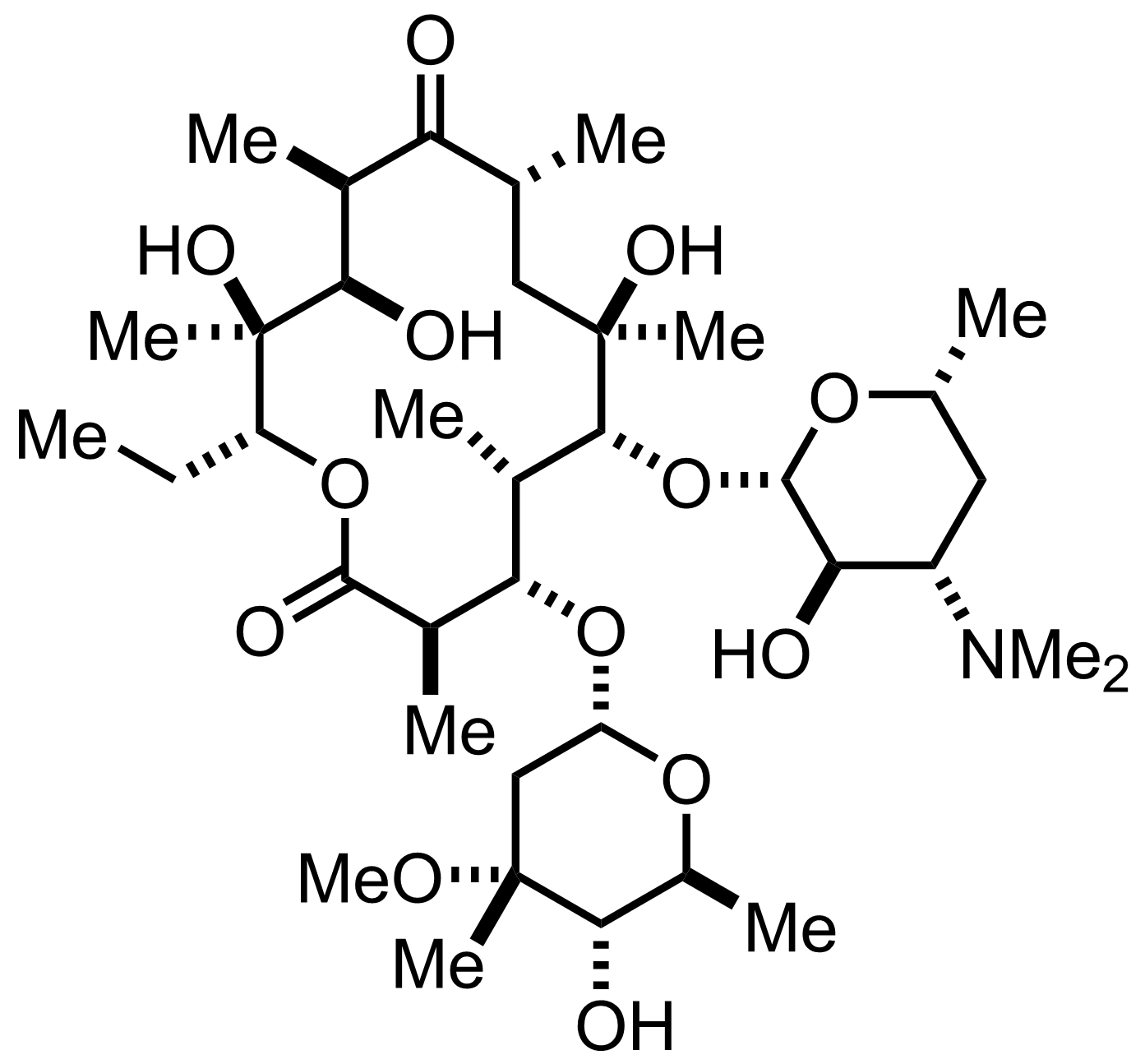
Of the 10^60 small molecules that theoretically exist, there is no ‘ribosome' for creating them, each must go undergo at least a somewhat custom synthesis process. Some chemicals are impossibly hard to create, some are easy to create, and lots lie in the spectrum between. A fun example of the former I used in the article was erythromycin A, a now-common antibiotic that was originally isolated from a bacterium. From beginning to end, this molecule took 9 years to figure out how to synthesize.
And some molecules are even harder! After 40 or so years, the total synthesis of Paclitaxel, a chemotherapy agent, is still an ongoing research effort. In the meantime, we just harvest the chemical from a very specific of tree.
This makes machine-learning in chemistry somewhat annoying, because it means your generative model can happily spit out thousands of candidate molecules to bind to some input protein, and 99% of them, perhaps 100% of them, are intractable to create given your non-infinite budget and time constraints.
When I first wrote the article, it seemed like there were two possible fixes on the horizon.
The first fix was that that small molecule models will become more ‘synthesis-aware’. What does that mean? Quoting from my article:
One definition could be low-step reaction pathways that require relatively few + commercially available reagents, have excellent PMI, and have good yield. Alongside this, we’d also like to know the full reaction pathway too, along with the ideal conditions of the reaction! It’s important to separate out this last point from the former; while reaction pathways are usually immediately obvious to a chemist, fine-tuning the conditions of the reactions can take weeks.
In this world, you may personally not know how to synthesize the bizarre stuff your model spits out, but, if your model is smart enough, perhaps it’d be able to helpfully provide all the steps needed to make it.
The second fix was that arbitrary synthesis of molecules would simply become a lot easier, and that something akin to ‘ribosome for chemical synthesis’ would miraculously be invented.
Now, there’s the obvious steelman to both of these: chemical screening libraries—or, chemical space that is known to be easily synthesizable—is quite large, and potentially accounts for all useful stuff. So, maybe you don’t need models that even generate molecules or better synthesis, you just need models that can filter from this pre-existing known of ‘reachable’ chemical space. From my article:
One example is Enamine REAL, which contains 40 billion compounds. And as a 2023 paper discusses, these ultra-large virtual libraries display a fairly high number of desirable properties. Specifically, dissimilarity to biolike compounds (implying a high level of diversity), high binding affinities to targets, and success in computational docking, all while still having plenty of room to expand.
With all this background context: how has this field changed in the 1.5 years since this article was published?
On the synthesis-aware modeling front: it may be somewhat interesting for you to learn that a singular MIT professor named Connor Cooley was—circa 2024 when I wrote that article—responsible for a rather significant chunk of the ML x synthesis literature I came across. As of 2026, this continues! And unfortunately, from a paper he published in mid-2025 that was attempting to evaluate possible failure modes of these synthesis-aware generative molecular models, he had this paragraph:
It is also natural to wonder if the task of reaction prediction has been “solved” to a meaningful degree. When using these models in practice, it quickly becomes apparent that the answer is a resounding no. In fact, when using reaction predictors in new domains, not only might a model make an incorrect prediction, it might hallucinate a product preposterous to a human chemist.
So, it does not immediately feel like there are major breakthroughs that have cropped up in the past year—which I further confirmed with John Bradshaw, the first author of the paper, who I coincidentally met up with the other day. Now of course, I’m certain there has been some material progress, but little that is immediately legible to me.
Let’s move on. How are we doing with the second problem: improving our ability to synthesize arbitrary chemicals?
Curiously, there has been a huge flurry of startup activity here over the last year. onepot raised a $15M Series A in November 2025 to synthesize arbitrary molecules, Chemify raised a $50M series B in October 2025 to synthesize arbitrary molecules, Excelsior Sciences raised a $95M series A in December 2025 to synthesize arbitrary molecules. A pattern is emerging here, and I’m not even naming everyone who has started something in this space!
The optimistic read is that we're witnessing the early stages of the long-prophesied chemical synthesis revolution, that the combination of better robotics, improved reaction prediction, and some clever engineering is finally paying off some fundamental fruit. Is that true? I don’t know! These things take time to play out.
Speaking of onepot—which is a synthesis-on-demand service startup—there’s a particularly illuminating text interview that the renowned Corin Wagen had with the founders of onepot (Daniil Boiko and Andrey Tyrin) back in December 2025 that may teach us something useful. A few interesting excerpts are as follows:
Andrei: I also think that synthesis is a very complicated problem, and I think we have unique insight on how to solve it from an interdisciplinary standpoint. So you can imagine the company would be trying to solve it just by improving the organic chemistry side of things, and that's a very reasonable approach, or there are companies that would really invest in developing very sophisticated models for synthesis, but in our perspective it's important to have all of the components, if that makes sense.
Both the organic chemistry side of things and the computer science side of things are intertwined. So that is very important here for the success of making synthesis automated basically.
This is, I think, a very fun take. Maybe there is no magic sauce that needs to be really invented, but rather, all the ML and chemical tools for (largely) solving synthesis are already out there, someone just needs to have a broad-enough knowledge base to glue it all together. Happily, Corin presses on this a bit further:
Corin: Where do you guys see that your big advances have happened so far? So are you inventing new reactions? New instruments? Is the magic in the integration? What are you doing that other folks haven’t figured out yet?
Daniil: Yeah, it’s a good question. So, automation is really straightforward. When you start doing something very complex, I always think that I’m going to hit a wall in what I’m doing—everybody says it’s very hard—and then we start doing it and it just never happens. We just do it and still it’s fine all the way down. It’s a lot of work but still totally fine. So we don’t see much of a problem on the automation side there. We have to customize existing hardware a little bit, but it’s fine.
We do see a lot of gains on this tool ML layer. So Andrei probably could tell more about this, but it’s the reason why we have success-based pricing. So if we fail an experiment, we’re the ones who have to pay for it, which is very unfortunate. So there is very clear value from these models. I mean, you can literally calculate the economic impact of increasing your accuracy of the model by another 5%. It’s very clearly translated.
And on the agentic side, it’s another thing: if you could make a thought experiment and let’s say replicate one of the largest companies that works in enumerated library space, you would need to get all the reactions, all the protocols, and develop them from scratch. Just imagine the amount of effort that will go on there. You would need chemists working on hardware, setting up the reactions, doing hundreds of experiments for every single reaction, then analyzing the data and making conclusions, then optimizing again. It’s absolutely ridiculous.
Andrei: I also think that with our approach, we have the pieces that improve one another. So you know: one direction is we have the agents that have this broad intelligence, that have this literature knowledge, that can design high-level conditions for experiments. This is an exploration phase, a creative phase.
And then we also have another direction with custom models that are highly specialized to capture these patterns hidden in reaction data. They just complement each other really well: we have this general-layer intelligence and this specialized intelligence that captures things at the atom level. You know, you place a nitrogen somewhere, reactivity changes suddenly, and you need to find another route, maybe even get more steps there. It’s a bit counterintuitive for humans and for LLMs as well, so having this specialized intelligence is very important.
Neat! There is a bet here on natural language LLMs being very essential to the whole process. And, for what it is worth, there is plenty of precedent that this is a directionally correct idea, here, and here, and here. Cool that someone started up a company with that explicitly part of the thesis.
Finally: how is the steelman I presented in the old article doing? Do we need arbitrary molecular synthesis? The definition of ‘easily accessible chemical space’ changes as reaction pathway design as a discipline gets better and better, and, when I first last looked into the subject, this space was hovering at ~40B molecules.
As of September 2025, this space has been expanded to 83B, which specifically refers to a chemical area that Enamine, a very well-established, chemical supplier company, considers easy-to-create within 2-3 weeks. And, in April 2025, Recursion and Enamine announced a partnership to use Recursion's MatchMaker tool (a model that assess whether a small molecule is compatible with a specific protein binding pocket), to intelligently filter Enamine’s 65B (at the time) compound library down to 10 enriched screening libraries from over 15,000 newly synthesized compounds designed to find binders to 100 drug targets.
This is, I think, exactly what you'd expect to happen if the steelman is correct. If easily-accessible chemical space is large enough to contain all the good stuff, then you don't need fancy synthesis, you simply need fancy filtering. As of today, I do not think there has been an update to this project, but excited to see where this goes! If anyone from Recursion is reading this and would allow me to break the scoop here, contact me!
So, to summarize, ML is still technically bottlenecked by synthesis, but there is increasingly aggressive effort to fix both the synthesis problems outright, and to figure out whether the ‘hard’ synthesis is even needed. Now, similar efforts almost certainly existed back when I wrote the article, but they seem much more well-capitalized and numerous today.
Molecular dynamics data will be essential for the next generation of ML protein models
tl;dr: My thesis was somewhat accurate. Some ML + molecular dynamics (MD models have been trained out since the article, and the synthetic data used for them was somewhat helpful. But the core dataset problem that comes alongside MD—timescales that are too short—have not been solved, and those prevent MD from being extremely useful as training data. There is good effort being put towards fixing this though! But my thesis was also too absolutist; non-MD models likely will continue to have their place.
Keep reading with a 7-day free trial
Subscribe to Owl Posting to keep reading this post and get 7 days of free access to the full post archives.